DTG Printers
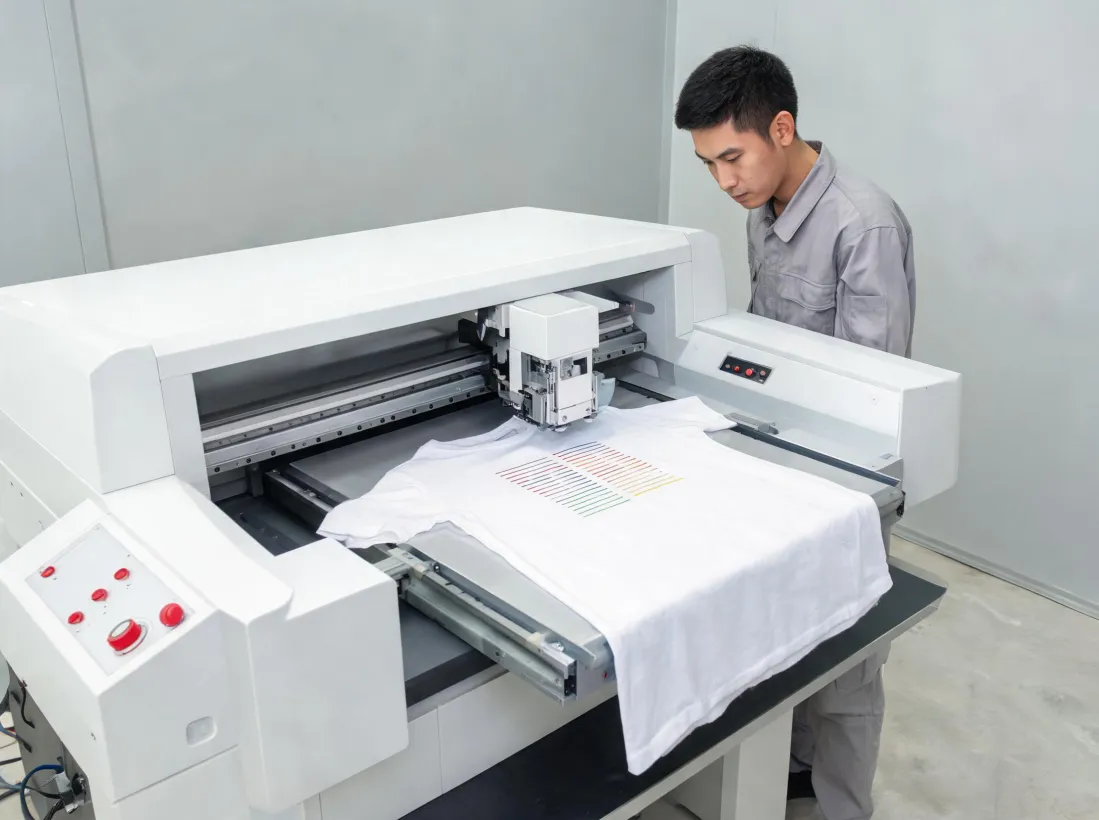
For garment printing where pretreatment, platen loading, white-ink circulation and curing are managed as one recipe.
Production printing, reduced to measurable decisions
Shortlist DTG, UV, sublimation and inkjet systems by substrate behavior, ink configuration, maintenance demand, finishing route and documented acceptance criteria.
Catalog by process route
Each family changes the upstream preparation and downstream finishing work. Begin with the sample, not the machine label.
For garment printing where pretreatment, platen loading, white-ink circulation and curing are managed as one recipe.
For rigid and specialty substrates qualified by surface preparation, adhesion, layer build and UV-LED cure exposure.
For polyester transfer workflows that coordinate paper profile, ink load, press temperature, pressure and dwell.
For commercial output evaluated through media transport, color target, resolution mode, drying and duty pattern.
Before a purchase order
Published specifications describe a configured model under stated conditions. A production decision also needs facility, operator and finishing evidence.
Log material supplier, lot, thickness, surface treatment and storage condition.
Save resolution, pass mode, ink limits, profile and cure or dry settings.
Include loading, unloading, cleaning, changeover and scheduled operator checks.
Set visual tolerance, adhesion or wash method, finishing step and inspection light.
Selection questions
Not by itself. Resolution, pass mode, white coverage, artwork size, curing and operator handling affect sustained throughput. Time a representative job from file release to finished sample.
White pigment can settle during idle periods. Confirm circulation, agitation, nozzle-check and cleaning procedures for the proposed ink set and local environment.
No. Media coating, fiber blend, surface energy and finishing temperature can shift color and adhesion. Approve profiles against actual production materials.
Record the printer configuration, ink set, substrate lot, environment, print mode, finish settings, measured result and acceptance decision so the test can be repeated.
A useful inquiry starts with the work
Include the actual substrate, target image, run length, shift pattern, available curing or finishing equipment, and the procedure used to approve the result.